
Urban Climatic Research Policy
Vienna City Council has released a catalogue of research topics to support climate-friendly urban developments. It is based on the Smart Climate City Strategy, the goals of which are only achievable through collaboration with science and research players in the city. The recognition of the importance and excellence of Vienna’s research institutions is a major step in the direction of scientifically informed policy making. It has high potential, considering that Vienna alone is home to some 26 Higher Education institutions, including the 660-year-old University of Vienna, one of the largest and oldest universities in Europe.

Figure 1. Vienna Research Catalogue for a Climate-friendly City
Research and innovation are the main levers for the local government to develop climate-neutral policies. It would provide the necessary evidence base needed for focussed measures to drive the pro-climate urban agenda. The city’s ambition is to have research projects aligned with real-world challenges and requirements so as to achieve a noticeable impact. The research catalogue encompasses a wide range of themes related to the urban climate challenges and suggested solutions. It is arranged in three strategic areas: climate protection, climate adaptation, and recycling. The Council also emphasises that the climate crisis affects all people, but in different ways and unevenly. Hence climate policy is equivalent to social policy.
The topic cluster that is most closely related to SUTEE objectives is called “Green Spaces and Urban Ecology”, It covers quality green and free spaces in support of health and wellbeing. The aims and objectives are shown in the two graphics below (fig.2 & fig.3). The City’s research requests to HE institutions include the monitoring of natural spaces in relation to climate change. This is fully in line with SUTEE supporting the development and environmental awareness of young people and to build capacities that combine green and digital competences (cf. the SUTEEcomp framework).
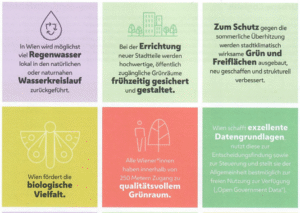
Figure 2. Vienna climate objectives and research topics (1)
The research theme around the monitoring of natural spaces asks for information on how climate change affects water supply and the temperature of lakes and wetlands, forests and meadows. Of further interest are the types of data that support continuous monitoring, such as shading, soil moisture deficit, heat islands, extreme weather events, drying up of natural ponds, neobiota, noise, or pollution levels in air and water.
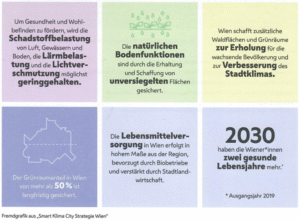
Figure 3. Vienna climate objectives and research topics (2)
Another highly relevant aspect for the SUTEE project is the topic cluster on “Ecosystems and Biodiversity”. It covers the concerns of shrinking habitats for wildlife and plants through sealing of natural soil which also leads to soil moisture deficits and overheating. Among other research questions, it is asked how urban green spaces (including parks, cemeteries, allotments, etc.) affect biodiversity and which factors influence healthy biodiversity-oriented green space designs.
What is evident in the research catalogue is (a) that there is an enormous breadth of topics related to coping with environment-friendly social politics, and (b) that the SUTEE project is both timely and highly relevant to start addressing the issues on behalf of future generations of urban dwellers.