
As part of the SUTEE project, a pilot learning activity was carried out to bring environmental education beyond the classroom and into the everyday urban environment. On 22 January 2026, students from IES Ramiro de Maeztu in Madrid participated in an outdoor educational experience designed to raise awareness about the importance of green areas in cities through direct observation and data collection.
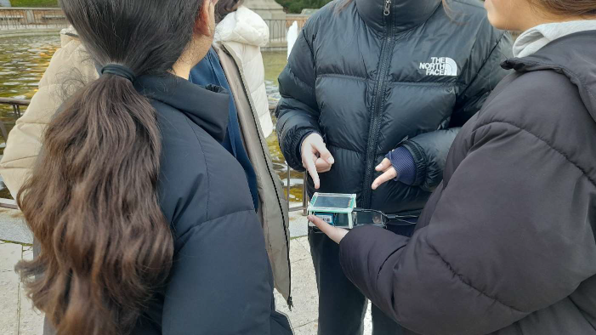
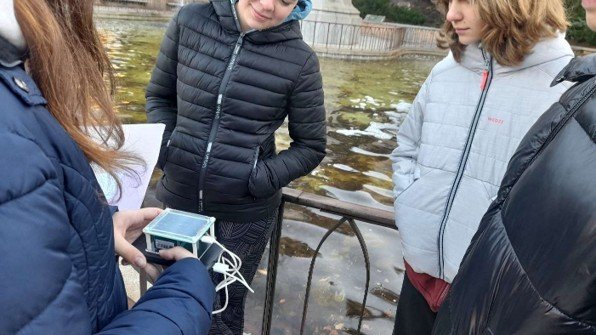
The activity, titled “Walk around the high school and recognition of urban environmental measures,” involved 28 students aged 12 to 13. The main objective was to help them understand how environmental conditions can change significantly within a relatively small urban area, and how factors such as traffic density, street layout, and the presence of trees influence air quality, temperature, and noise levels.
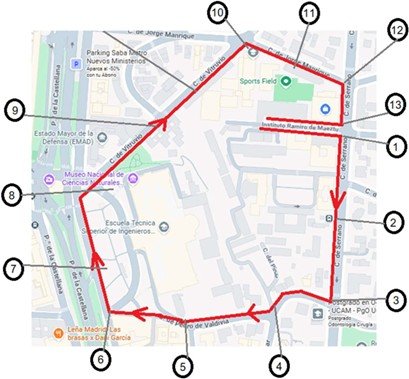
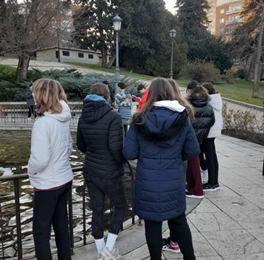
Students carried out a guided walk through the Chamartín district of Madrid, following a route that combined high-traffic avenues, quieter residential streets, and areas with different levels of vegetation. Thirteen measurement points were defined along the route to ensure systematic data collection. The walk took place between 14:10 and 15:10 and was carefully planned to minimize street crossings while maximizing exposure to contrasting urban environments.
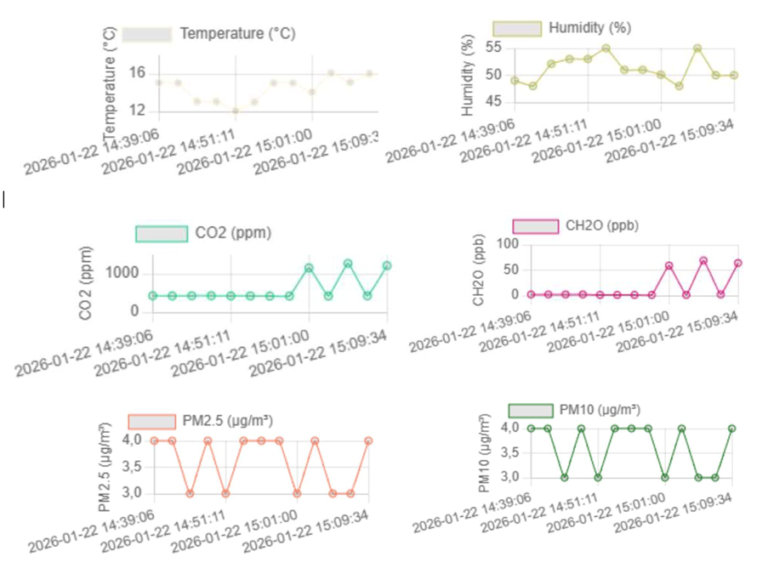
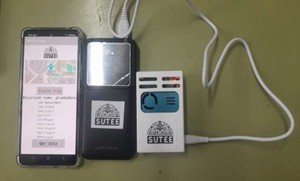
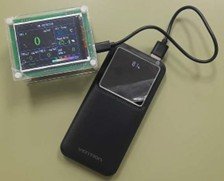
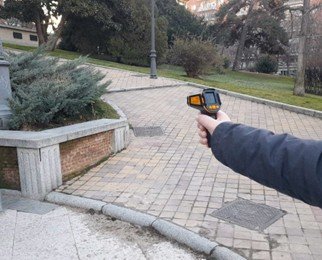
Working in four groups, students used a variety of environmental sensing devices. One group carried the SUTEE IoT multifunction detector, while the other groups used complementary instruments, including particulate matter sensors, portable environmental monitoring devices, and an infrared temperature meter. Together, they measured temperature, relative humidity, particulate matter concentrations (PM10, PM2.5, and PM1), and noise levels at each point along the route.
Despite initial concerns about managing a large group of students in an urban setting, the activity ran very smoothly. Students were highly engaged, attentive, and meticulous when taking measurements. Handling real sensors in a real environment clearly increased their motivation and sense of responsibility. The outdoor context helped transform abstract concepts related to air quality and urban sustainability into tangible and meaningful observations.
After the excursion, a follow-up classroom session was dedicated to sharing and analyzing the collected data. Students discussed how the measured values varied along the route and attempted to explain these differences by relating them to traffic intensity, tree density, and surrounding buildings. This reflective phase was key in reinforcing data literacy, critical thinking, and the ability to connect environmental data with everyday urban features
The pilot activity was also evaluated using a satisfaction and usefulness questionnaire completed by the students. The results were very positive, showing a high level of satisfaction with both the activity itself and the learning value it provided. Students reported that the use of sensors made the experience more interesting and helped them better understand the role of green areas in improving urban environmental conditions.
From a teaching perspective, the materials and devices used were well suited to the age group and learning objectives, and no significant changes are considered necessary. As a possible improvement, similar excursions could be organized in other areas of Madrid to allow comparisons between different neighborhoods and to further explore environmental differences within the same city.
Overall, this pilot demonstrated the strong potential of combining outdoor learning, environmental sensing technologies, and data analysis to foster sustainability awareness at an early age. By measuring their own surroundings, students became active participants in understanding their city and the crucial role that green spaces play in creating healthier and more sustainable urban environments.